How does NLS Work?

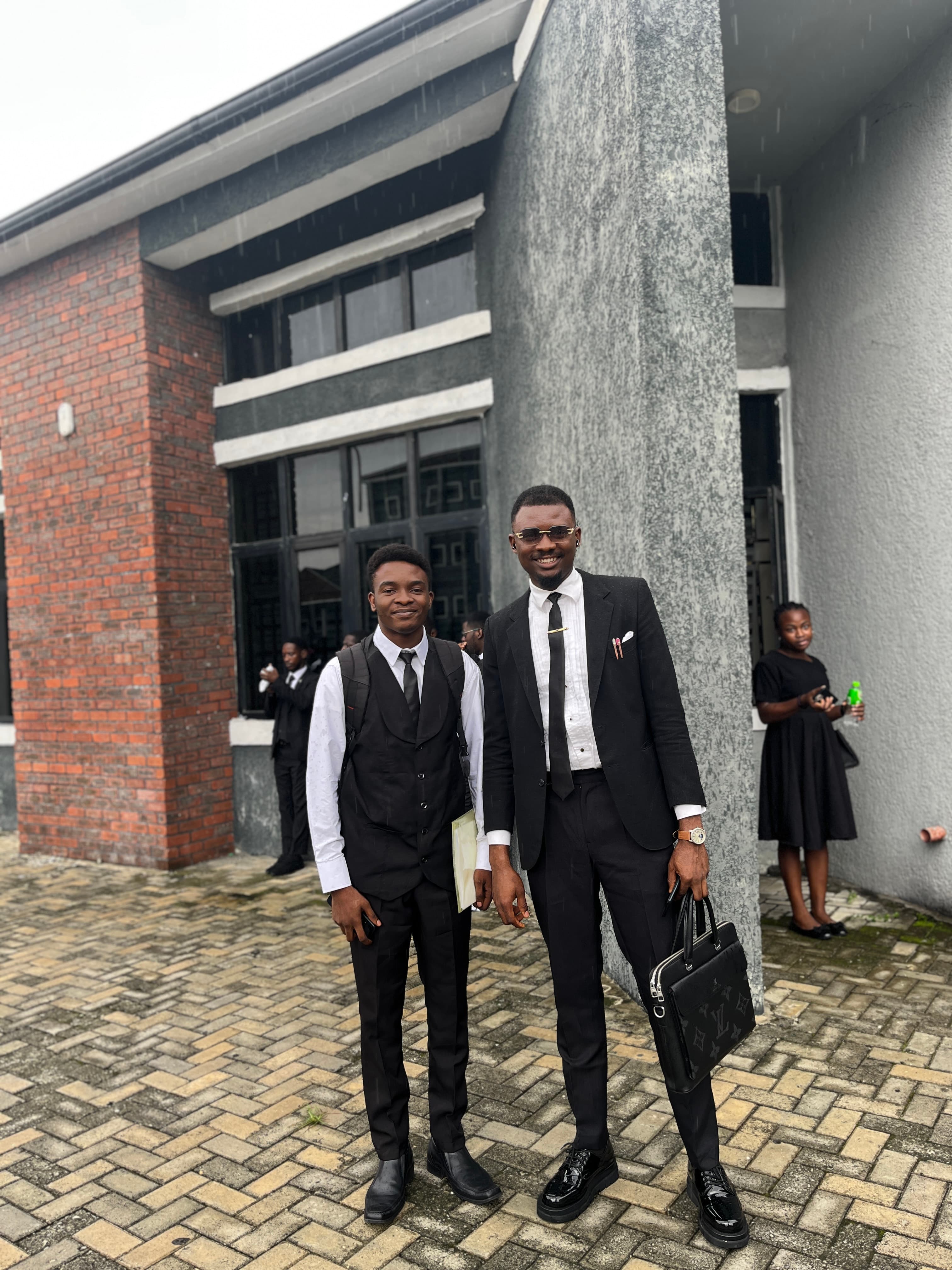
Uchenna Eke-Awa
Founder, Justice Joust
Nigerian Law School, Port Harcourt Campus
Background
I had missed NLS twice: a regular session and the recent backlog session. Within those intervening years, I worked as a freelance full-stack developer and an IT administrator under GovTech in a government agency. I had been out of school for nearly two years.
I did not join a law firm during that period because I felt tired and resentful about not going to NLS with my mates, and the constant questions from lawyers about it made me avoid the profession entirely. I was away from law for some years. Even when I got my admission in 2025, I did not open my books as I should have. I did not have the appetite for studying because I genuinely found it boring at that point.
Foundations: The Basic Principles
There are sets of basic principles that help keep you in check at NLS: class attendance, studying, attempting pre-class tasks (alone or with a group), and attending group meetings. These principles ensure you are able to stay on track with your basic goal, which is passing Bar Finals.
To go a bit beyond the basics, you need to set a goal, build a timetable, apply the basic principles, and shut down most aspects of your life that could disturb or reduce your efficiency.
Goal Setting
In March 2025, I had already set a goal to make a First Class. I refined it in April because it was too strict. I was barely sleeping and it was affecting my productivity in class.
Class Attendance
Class attendance is very important because that is where your lecturers give you the premium guide that surpasses everything you know, or think you know. Sometimes I could not understand how certain concepts were presented. For instance, during Sale of Land I and II, I was not following well because of the many steps required to conduct a sale. I wrote down what I could in class and then continued studying with extra resources before I began to read and practice that topic independently.
Sleep Schedule and Productive Hours
I am a light sleeper. I am usually awake from 2 AM until daybreak, so those periods were my most productive hours. I read class tasks during that time, and the topic with Badmus or Mayowa if it was for Corporate Law. I started using Mayowa during the middle part of the journey.
Sleep as much as your body demands it. This depends on you, your goals, your academic prowess, and your bodily strength. I found that if I did not sleep for at least three hours, my performance the next day dropped significantly. I could not retain anything.
During Bar Finals, I slept through most nights. I did not do all-night study. I only revised and skimmed through my solved Pre-Class Tasks, and stopped looking at the Compendium of Past Questions during that period because it was doing more harm than good to my confidence.
Time Management
NLS is a fast-paced environment that can mentally crush you if you are unprepared. Most students have no idea how it works until they are already in it. You need to know how to allocate your time, and that is entirely your responsibility.
With your timetable, you need to decide how much leisure time to allow yourself after class or during breaks. If you are far behind schedule, the class breaks are a golden opportunity to study on your own. Allocate time for study by choosing your reading environment carefully.
I had multiple places where I read. My room in the Port Harcourt Campus was a nice space, but I read there less than ten percent of the time. The proximity to my bed, frequent interruptions from my roommates, and general difficulty concentrating there made it inefficient.
I went to class to read, isolating myself as much as possible. Unlike my room, I barely knew the people around me in class and rarely interacted with them. I later started using the Reading Room on the second floor of Hostel A after I fell ill. Honestly, that period of illness, despite everything, was when I understood concepts faster and more clearly than at any other point in the year. I was warm, stationary, and focused. I covered more than half of Corporate Law Practice in that stretch and retained it well.
I had a timetable, and it was a strict one. I missed some segments because I could not always keep up, especially after experiencing brain fog and an intense need to rest. But the timetable held me accountable to myself and to the grade I was pursuing. It is worth having one, even an imperfect one.
The Pre-Class Task Method and AI-Assisted Study
Past questions and pre-class tasks became my recovery tool.
Most of the pre-class tasks I completed before the second externship had some errors. They were done with my class group, and the errors only surfaced when the lecturer reviewed them in class.
I had started using Notebook LLM from the first week of NLS, initially to create a document comparing the 2025 FCT High Court Rules with the 2019 Lagos High Court Rules. In law school, speed is your ally. You do not need to do everything manually. If you can automate your workflow, you should. What matters is being rigorous in your study approach.
I used Notebook LLM not because of its popularity but because it is designed to follow instructions and only draw from the materials you provide. Traditional LLMs hallucinate. So I created several notebooks for the different courses and began from week three. I fed the pre-class tasks, along with the outcomes, to the LLM and it provided answers with thorough explanations based on my prompting. I did this for all courses until three weeks before exams, at which point I had a completely solved set of class tasks with their answers.
Because of this, I stopped reading my class notes and other materials as primary study content. Exam questions are developed from pre-class tasks. The examiners only change the names and addresses of the parties involved. The principle of law remains the same. Pre-class tasks align directly with the course outcomes, and because they are vast and diverse, they cover everything you need to practise. This method did not eliminate the need to read notes or materials. But it took over 80% of my study time, and I am grateful for that.
At the point I started studying with pre-class tasks, I had only finished one course twice and the others once. I could barely recall what they said. But the pre-class tasks helped me read, understand the required steps, and memorise patterns of answering questions. The Compendium of Past Questions was also a game changer, especially for Property Law Practice, which has its own exam language. You need to understand what the examiners expect from you and why they expect it.
I used OpenAI's ChatGPT to simplify cumbersome concepts and statutes. It is important to read CAMA 2020 from the raw source, but there are moments when you cannot understand what a particular section is saying. Snapping that part of the law and sending it to ChatGPT for a plain explanation proved very effective. I shared this approach with one of my reading partners and she implemented it as well.
I always instructed the LLM to include authorities in its answers. Without authorities, your grades in NLS are likely to suffer. With the solved pre-class tasks as my notes, I read them aloud, noted the scenarios, and memorised what was required. During the exam month, and six weeks before it, this was essentially all I studied alongside the Compendium.
What You Are Reading and How You Are Reading It
It is one thing to read, another thing to study, and yet another thing to understand. The goal of NLS, I think, is to get you to remember things that you have read or studied. With the broad curriculum, you can easily miss marks by looking in the wrong direction or practising too little on what actually matters.
Corporate Law Practice is a good example. The curriculum is overwhelmingly large. I covered it twice, and the last revision was the night before writing it. I focused too heavily on the difficult portions because they were confusing and dense. The first half, which I was more familiar with, received too little attention during my summary days. That may have been where I lost marks.
Reading does not guarantee a First Class or a Second Class Upper. The real question is: what are you reading, how are you reading it, and how relevant is it to what the exams actually require?
Your study must be in line with the NLS curriculum and the outcomes that are required from you. Do not read outdated materials or textbooks. The source of truth is your class notes, class slides, and the laws and cases you are required to know. If you read supplementary materials like Badmus or Mayowa, always verify that your study is in line with the course outcomes. You do not need information beyond what is benchmarked.
I listened in class, made notes from the lecturers, and obtained class slides wherever I could. From a young age I read in my mind. At NLS, I found that I could not recall what I read silently, but I could recall academic conversations with colleagues. I started reading aloud to myself, and even did lip-syncing where the environment permitted. My retention increased by roughly 70% after that. I rarely forgot things I read aloud afterwards.
I read indoors when my body permitted it and outdoors when I became overwhelmed. I converted my notes to a Word document and read them on Google Docs on my phone while walking slowly around the campus at night. That was one of the only ways it stuck for me. I occasionally incorporated discussions with my roommates and study partners into my schedule when I found it helped.
I also did MCQs as part of my study, first on paper and later through justicejoust.com, which was available to everyone until I introduced some features that broke the app. I had to abandon the dev work to focus on my grade.
Guidance from Seniors and Strategic Segmentation
I had seniors and colleagues from university who had gone to NLS a year before me. Christopher Ewulum, Kelechi Agupusi, and Amarachi Okoroafor were readily available to provide me with guidance and support throughout the year. Christopher had several sessions with me and other mentees and genuinely pushed me into taking this race seriously. That early gingering mattered more than I expected it to. I relied on their guidance to focus on the most important things and not waste time on extras.
I started memorising Evidence Act provisions and segmented Corporate Law Practice into timelines and procedures with relevant cases and sections from the relevant laws. I did the same for Property Law. I broke my work into summaries with key points for every topic and did not read things that were likely to slow me down without adding exam value.
Social Media and Phone Use
When I got to NLS, I had to go offline from social media because I was addicted to checking Twitter and TikTok. At some point, I kept my phone in my room and read for two days without touching it. I only had to regulate that when my parents tried to reach me for two days and thought something had gone wrong. That stretch was around four weeks before Bar Finals.
The Externships
I found myself slacking during the first externship, the Courtroom attachment. Our court sat from 9 AM until 2 or 3 PM, but our supervisor ensured we left by 2 PM to allow time for study. I found the court proceedings particularly boring, having done internships during my undergraduate years. I read in court and at home. When I realised my family environment was a hindrance to study, I made it a habit to study at night until about 5 AM, then sleep. It helped.
The second externship, the law firm attachment, was less enjoyable. I was genuinely frustrated with how things were being run there. But I had more time to study during that period than I did during the court attachment.
By the time I was preparing to return to campus, I was about 70% ready for Bar Finals. I was also behind in some courses and could not meet my timetable. That was when I employed the method that helped me close the gap.
Eating Habits and Mental Health
I was depressed when I resumed law school because a lot of what the lecturers were teaching was not entering my head as fast as I wanted. Because of my personal study timetable, I did not want to give myself grace to fall behind. I missed several self-imposed deadlines and stress-ate as a result. At any point of depression, I turned to food to keep going. It made me look heavier, and the NLS experience can genuinely push you towards disordered eating or other unhealthy coping mechanisms. Watch yourself. Get your emotions under control as much as possible.
Friendships
You need friends. But you have to segment the amount of time you allocate to those friendships, especially where your goals are not aligned for this NLS journey. Your friends do not have to be NLS students. They can be in another city and only reachable by phone or text.
By alignment I mean this: where your goals for Bar Finals are not similar, reduce the time you spend with those people and help them understand how challenging your period is. You do not need to be in friendship drama during your stay at NLS. It can wait until you are done with Bar Finals. Time is fragile and disappears fast.
Having Your Person
I had my person during Bar Finals. All my rants and frustrations were poured out whenever we had our call. We spoke every day and it was as though she was in NLS at the same time as me. She was in another city while I was at PH Campus. Having that outlet, that one person who received everything I could not say in the exam environment, was more important than I can properly explain.
Study Partners Who Made a Difference
During the Pre-Bar, I read as though it were Bar Finals itself. I temporarily separated from my reading partners because they were not treating the Pre-Bar with the same urgency I was. I met Tamara and, through her, Blessing Omoyibo. We studied together in Hostel A's common room from that Sunday until Wednesday morning. They read at extraordinary lengths, all night, practising their notes. They helped push me to read more. Unfortunately, I could not match their pace because I could not function without at least three hours of sleep.
Studying with Blessing and Tamara was where I finally understood Mortgages, a topic in Property Law that had been a persistent source of anxiety for me. I am genuinely grateful to them for their patience and availability during that period.
My core study partners, Sandra Awurum, Sandra Okeke, Sandra Nwanganga, and Favour Ochea, were also essential. We solved past questions together and ran mini-workshops across our courses. We did marathon MCQs where we solved questions and timed ourselves. On the advice of Amarachi Okoroafor, I timed myself to finish within 40 minutes, sometimes 50. That preparation helped me finish in under 45 minutes during Bar Finals, leaving 15 minutes to cross-check answers and complete questions I was uncertain about.
Positions and Extracurricular Activities
Concerning positions, I only held one that was related to what I actually wanted to do. I was on the SRC's Academic Committee and served for just about a week before leaving due to a political fracas among the SRC members. I did not want to get involved in that, so I stepped away. That was after I had helped provide a structure of activities: a Bar Finals countdown, a draft challenge, and law breakdowns. It was something I found meaningful, but it was short-lived. I miss the team, but leaving was necessary. There was nothing I was willing to let come between my goals and this journey.
I also participated in the Mock Trials, which occurred right before the exams. I took charge of the research work, prepared and delivered evidence and processes. I was also a an advocate, and successfully convinced the Court to not grant the defendants bail. Getting that done within the chaos of the pre-exam period, when people were running in every direction, was genuinely challenging. I did what I had to do to get my group in line.
The Lecturers
The lecturers at NLS are very good and wonderful people. One thing about them is that they are approachable and available to assist you in every way they can within their role. My group mentor, Mr. Tobi Ololu, is a chilled person and was always there when needed.
I also remember the Portfolio Assessment, where I appeared before the panel. They were calm and gave me a warm reception. That morning, I had been practising and memorising Allotment of Shares under Corporate Law Practice with Sandra Awurum and was not even thinking about the portfolio assessment until I walked into the room.
The Professional Ethics Incident
I remember a dramatic event that happened during the exams. Most of the exams had been starting around 12 noon rather than at 11 AM as scheduled, and I had already grown accustomed to that pattern. I did not dress up early for the Professional Ethics exam and planned to head to the venue around 12 noon so I could use the extra time to revise.
A few seconds after 11 AM, commotion broke out in Hostel A that the exams had already started. I was not dressed in corporate. I could hear Dr. Mrs. Egbe's voice from the ground floor. I was in Room 150 on the second floor. My roommates, already dressed and ready, ran downstairs to the exam hall. Dr. Egbe took her time to move around and notify everyone that the exams had started and that students should report to the hall immediately.
That was the longest stretch of my life. As it turned out, I was lucky: they had not yet started the paper. The invigilators were in the hall getting the students settled, but the exam itself had not commenced. I made it. But I never repeated that mistake.
Falling Ill
I fell sick along the way and genuinely thought at one point that I might not recover. I was admitted to the ward and spent two days there during the height of Corporate Law Practice, which was already overwhelming. The experience was frightening. I wore triple-thick clothing and forced myself to the Reading Room in Hostel A. That period turned out, paradoxically, to be one of my most productive stretches in terms of understanding and retention.
Bar Finals: What Actually Matters
From my observation and personal experience, I have one core piece of advice: it is not about how long you read or what you read. It is not entirely about how prepared you are. It is about speed in the exam hall, your ability to work under pressure without losing information, your ability to think logically and directly, and answering questions without losing marks.
Everyone who hoped for a First Class did what I did. They did the same things the First Class students did right before the exams. What separates outcomes is how you write the exam on the day. That is the only criterion that ultimately matters.
Many students report forgetting things they memorised just before entering the exam hall. Some forget basic principles of law they spent weeks on. You can attribute it to faith, to God, to the pressure of the room. Whatever it is, the exam day has its own logic.
Closing
I really wish everyone who went to NLS in 2025 peace and hope. It is a fast system that eats your mind right before you start. To all my colleagues who did not get the grade they worked for, due to the unique grading system of the CLE: I hope you find some solace in the fact that you alone knew the efforts and personal investments you made towards this journey.
Subscribe to the The Weekly NLS Cheat Sheet
Master Civil, Corporate, Criminal, Property, and Ethics. Get our best weekly blog explainers in your inbox, then hit the Justice Joust app to practice what you've learned.
Test Your Knowledge
Answer past questions on Justice Joust and test yourself with Snap.